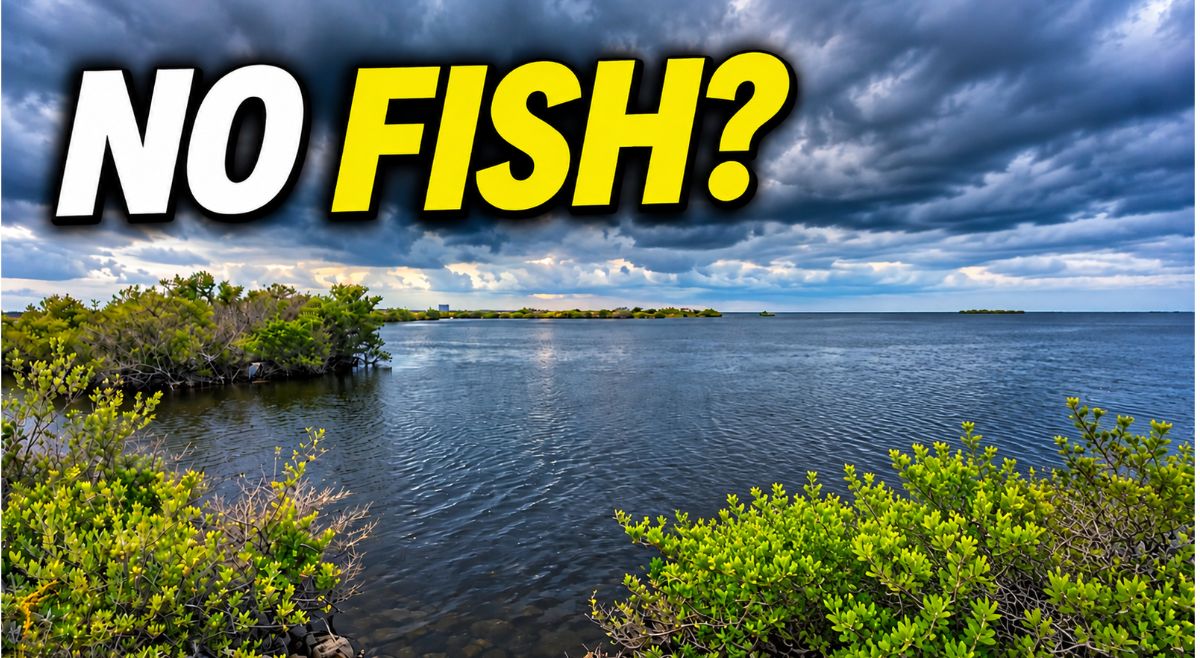
Have you ever pulled up to a fishing spot that looked absolutely perfect, only to spend hours casting without getting a single bite?
There’s bait everywhere, the water is moving, birds are nearby, and everything tells you there should be fish in the area.
But nothing happens.
That’s exactly how my latest fishing trip started.
Instead of spending the morning waiting for fish to show up, I decided to cover water, eliminate unproductive areas, and look for clues that would help me put together a pattern.
By the end of the trip, those clues led me to some quality redfish and speckled trout.
And the best part? I did it all without a boat or kayak.
Here’s how the day unfolded and what you can learn from it.

Featured Software:
Featured Gear:
Here’s some of the gear I used to catch fish during this trip:
- Rod: Slot Machine Medium
- Reel: Otis 2500
- Lure 1: Mulligan 4″ Paddletail
- Lure2: Slam Shady 2.0
- Rigging: 3/0 Round Eye Weedless Jighead 3/16 oz
- Line: Dawai 8 lb J-braid
- Leader: Ande 15 lb and 30 lb bite tippet
A Perfect Fishing Spot That Wasn’t Producing
My first stop had nearly everything I typically look for when targeting inshore fish.
There was moving water, plenty of baitfish activity, and birds nearby. It was the kind of place that makes you feel confident before you even make your first cast.
But there was one important thing missing.
Feeding fish.
I wasn’t seeing any feeding activity, and I wasn’t getting bites on the lures I was throwing.
This is where a lot of anglers make a mistake.
They find an area that looks productive and convince themselves that if they keep casting long enough, eventually something will happen.
Sometimes that works, especially when you know an area well enough to anticipate a particular tide or feeding window.
But when you’re searching for fish and don’t have that information, spending hours in one location can cost you valuable fishing time.
Rather than waiting, I made the decision to move.
Covering Water With a Purpose
When I’m searching for fish, I’m not trying to cast at every inch of shoreline.
Instead, I’m covering ground and stopping when I see something that deserves a closer look.
That might be moving water, a point, a culvert, baitfish activity, or an area that provides protection from the wind.
The goal isn’t simply to move around until I accidentally catch something.
It’s to gather information that helps me make a better decision about where to fish next.
I eventually caught a small redfish in an area with flowing water and plenty of bait.
Although it wasn’t the size I was looking for, it was encouraging. That location had many of the same features I typically associate with productive water.
But after fishing several different areas with limited success, I still hadn’t found a consistent bite.
One observation was beginning to stand out: wind protection and bait activity appeared to be important.
It was time to explore a different area.
Using Seasonal Changes to Narrow the Search
We had recently experienced our first major cold front of the season.
That meant fish could be transitioning away from more open water and moving toward protected backcountry areas.
But exactly how far had they moved?
Were they still near the mouths of the creeks, or had they already pushed farther toward the backs?
Rather than guess, I decided to investigate.
I moved to an area with long creek-like coves extending roughly a mile and a half to two miles inland.
My approach was simple.
Start near the mouth and gradually work toward the back, stopping at promising locations along the way.
One thing I immediately liked about this area was that it offered considerably more protection from the wind.
And on my second cast, I caught a small speckled trout.
It wasn’t a monster, but it was another useful piece of information.
Finding a Pattern Across Multiple Creeks
I continued fishing through two different creek systems, working from the mouths toward the backs.
By comparing what happened at different locations, I started noticing a pattern.
Most of the fish activity I was finding was closer to the mouths of the creeks.
Farther toward the backs, I wasn’t finding the same results.
That was important because it gave me a way to narrow down where I should spend the rest of my time.
Based on what I had observed, I wanted to find an area with three specific characteristics:
- A creek mouth: The more productive locations were toward the mouths rather than deep in the backs.
- Wind protection: Sheltered areas appeared more promising under the conditions I was facing.
- Baitfish activity: I wanted to see food available where I planned to fish.
Now, these conditions won’t necessarily be the winning combination every time you go fishing.
The important lesson is learning to recognize what’s working on that particular day and using those observations to guide your next move.
Using Smart Fishing Spots to Find the Right Location
At this point, I had a specific location in mind.
But before making the drive, I pulled up the Smart Fishing Spots app to see whether the area had the characteristics I was looking for.
I wanted a creek mouth positioned in a way that offered protection from the wind.
The app helped me evaluate the location and confirm that it had the layout I wanted.
Of course, a map can’t tell you whether baitfish are actively present at that moment.
That’s something you still need to verify once you arrive.
But by combining what I had learned on the water with the information available in the app, I was able to make a more informed decision.
And that decision paid off.
The Pattern Finally Pays Off
When I arrived at the final location, I found the bait activity I had been hoping to see.
Almost immediately, I started catching small trout.
That was encouraging because it reinforced the pattern I had been developing throughout the day.
Then the fishing got better.
I caught a smaller, bottom-slot redfish, followed by a much nicer redfish that put up a solid fight.
And then came one of the highlights of the trip.
A speckled trout measuring over 20 inches!
What made these catches especially satisfying wasn’t simply the size of the fish.
It was knowing that I had used information from several different locations to select an area that ultimately produced.
I hadn’t just stumbled into a productive fishing spot.
I had spent the day narrowing down the possibilities until I found the combination of conditions that was working.
The Gear I Used to Deal With Windy Conditions
Although location selection was the biggest factor in this trip, I also made a few adjustments to my tackle to accommodate the wind.
Here’s the general setup I was using:
| Equipment | Setup |
|---|---|
| Rod | 7’6″ Slot Machine |
| Reel | 2500-size spinning reel |
| Main line | 8 lb braided line |
| Leader | 15 lb |
| Bite tippet | 30 lb |
| Lures | 4-inch Mulligan and 2.0 paddletails |
| Jighead | Weedless Round Eye, 3/16 oz |
The biggest difference from some of my lighter presentations was the jighead.
I chose a 3/16-ounce weedless Round Eye jighead to help me make longer casts and maintain better contact with my lure in the wind.
If necessary, I was prepared to increase to a 1/4-ounce jighead, but the 3/16-ounce option was getting the job done.
I also had success using the Black Ice lure color.
However, there’s something else worth pointing out.
I didn’t spend the entire day changing lures.
I spent far more time changing locations and looking for fish.
And that brings us to one of the most important takeaways from this trip.
Stop Changing Lures When You Need to Change Locations
When fishing gets tough, one of the first things many anglers do is reach for another lure.
They change colors, sizes, profiles, and presentations, hoping to find something that will trigger a bite.
There’s certainly a time and place for making those adjustments.
But if you’re fishing water that isn’t holding feeding fish, changing lures may not solve the problem.
Sometimes the best adjustment you can make is changing locations.
Rather than working through your entire tackle box at one unproductive spot, consider what you’ve observed and whether another area might offer better opportunities.
Look for the differences between the places where you’ve found activity and the places that haven’t produced.
Those differences can help you build a pattern.
You Don’t Need a Boat to Apply This Strategy
Another important takeaway from this trip is that the same principles apply regardless of how you’re fishing.
I spent the day walking, driving between locations, and even riding my bike to reach productive water.
But my approach wasn’t much different from what I would have done in a kayak.
I was still covering ground, looking for bait, evaluating structure, considering the wind, and trying to understand how fish were positioning themselves.
Whether you’re fishing from shore, a kayak, or a boat, the process is the same.
And when the wind makes fishing open water difficult, land-based fishing can be a great alternative.
You just need to be willing to move and keep searching until you find productive water.
Final Thoughts
If I had stayed at that first fishing spot all morning, there’s a good chance I would have gone home without catching much of anything.
The spot looked perfect, but the fish weren’t cooperating.
By moving around, eliminating unproductive areas, and paying attention to what each location taught me, I was able to develop a pattern.
That pattern eventually led me to a creek mouth with bait activity and wind protection, where I caught some quality redfish and speckled trout.
So the next time your favorite fishing spot isn’t producing, don’t automatically assume the fish aren’t biting anywhere.
And don’t assume that changing lures is always the answer.
Sometimes you need to change where you’re fishing, not what you’re fishing with.
Every spot you visit can provide another clue. The more you learn from those clues, the better your next decision can be.
Want to Catch More Inshore Fish?
If you’re serious about catching more redfish, speckled trout, snook, and flounder, consider joining the Salt Strong Insider Club.
You’ll get access to fishing education, Smart Fishing Spots technology to help identify promising areas, a community of more than 67,000 members, and discounts on the tackle and equipment you need.
Become a Salt Strong Insider today and start making more informed fishing decisions.
Tight lines!
Frequently Asked Questions
How long should you fish a spot before moving?
There’s no exact amount of time that works for every situation. However, if you’re not seeing feeding activity or getting bites, it’s worth considering a move rather than spending hours waiting for something to happen. Pay attention to the conditions and use what you learn to guide your next decision.
How do you find feeding fish when fishing is slow?
Start by looking for clues such as baitfish, water movement, wind protection, and signs of feeding activity. If you’re not finding fish, cover more water and compare different locations until you begin noticing a pattern.
Should you change lures or change fishing spots when you’re not getting bites?
Both can be important, but changing locations is often the better decision if you haven’t found feeding fish. Rather than cycling through every lure in your tackle box, focus on finding productive water first.
Can you catch redfish and trout from shore during windy conditions?
Absolutely! Windy conditions don’t mean you have to give up on fishing. Look for accessible areas with wind protection, baitfish, and other promising features. The same principles of finding feeding fish apply whether you’re fishing from shore or from a boat.



Sound advise, Pat! Thank you, sir! Tight lines! 😎🎣🧂💪🏻
Thanks James!
Always great info. Thanks
Glad you liked it!
Great tips Pat!
Thanks!
Pat, as always excellent tips on how to find feeding fish. The smart spots app for me is a great tool it’s packed with so much info and data. I use it for planning my day. Then when I get on the water, just like at your first spot that had everything, if it looks like my plan is not perfect I switch gears for the situation. I know I have told you, and this is for anyone thinking about joining Salt Strong, Pat is one of the best coaches. You can’t lose joining.
Appreciate you Captain! Those on the water adjustments are the key to changing a potentially bad day into a good one!
Great video Pat! Luv seeing more land based videos, nice to keep it simple sometimes. Gotta remember, not everyone has a big ‘ole boat and endless hours to spend on the water but are still members, still spend money on tackle, and enjoy videos and intel on the type saltwater fishing they have access to. Thanks for all you do and keep ‘em coming!
Yes sir! Lots of people here land based!
Thanks for the tips Pat. Those were some solid fish! – Wes
Thanks! Days like those are sometimes more rewarding than the ones where you catch fish all day long.
Well Pat for me I rely on good old common sence and fishing experience and NOT the saltstrong smart spots app in fact I have found alot of the areas that I frequently fish are not marked as even fair let alone great or excellent and it doesn’t matter what time of the year or day or night and for me its been like that ever since the app was first introduced 4 going on 5 years ago in 2022 in fact to be totally truthful if saltstrongs reasoning for joining the club was all bases on the smart spots app I wouldn’t of joined at all because to me nothing compares to good old fashioned fishing experience attained by time spent on the water and nothing electronic like an app can ever come close to comparing now dont get me wrong since joining saltstrong back in 2017 then becoming a lifer in 2018 I have learned alot from the club but NOT from the smart spots app for me that app is almost a waste of time in that when I finally start to figure it out and get comfortable with it the staff updates it and it becomes frustrating to me because being old fashioned I’m no computer geek and wouldn’t want to be one either besides that’s why its called fishing and not just catching and I want to enjoy my sport and not complicate it because for me catching fish is only a small part of being on the water and if one stresses alot about just simply catching fish there missing out but that’s me and like I have always said I only speak for myself and what others do is there business and really none of mine just being real but thanks for your insight and all you do🤔😉👍
The spot I ended up catching fish was not a smart spot, I just pulled up the app to see if the area I wanted to go to would be wind protected. I very rarely go to a spot that’s labeled a smart spot, but I do use the app every time before I go out to plan the trip and while I’m on the water to make adjustments. The actual “Spots” are just a tiny bit of what this app allows you to do. There’s way more to it.