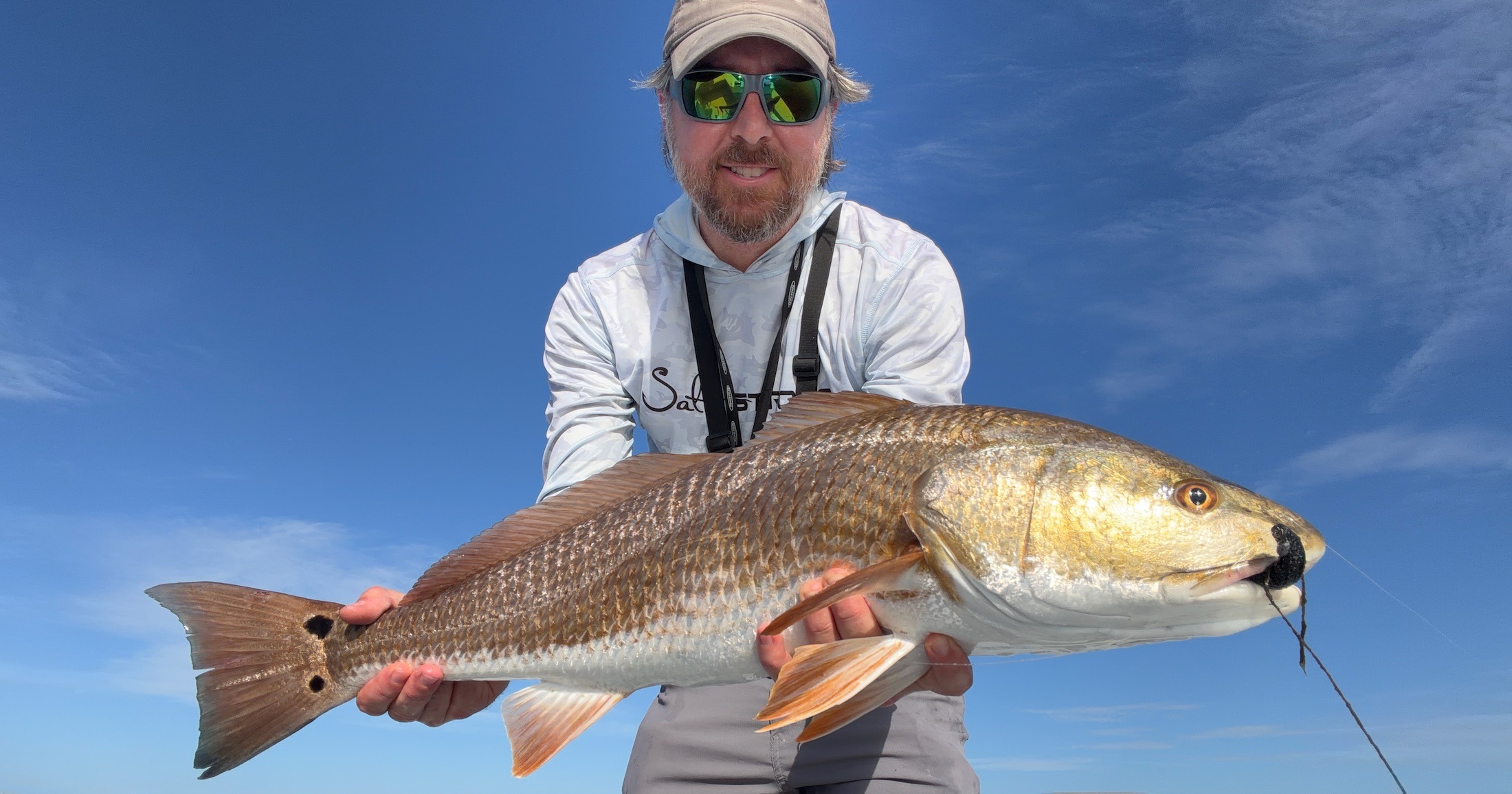
I was fishing a GREAT-looking spot loaded with baitfish during prime feeding hours.
The problem? ZERO fish.

Instead of finding another spot, I changed my approach and fished the exact same water again.
The result? A quick inshore slam, including some NICE redfish and snook!
Watch below to see how I turned a tough bite around and how you can use this same strategy before giving up on a promising fishing spot.

Featured Gear
- Rod: Slot Machine – Medium 7’6″
- Reel: Otis 2500
- Line: J-Braid 8 Grand – 8lb
- Leader: Ande Mono – 12lb
- Bite Tippet: Ande Mono – 20lb
- Lure: Polk County Tweaker (Black Ice)
- Rigging: – 3/0 Hoss Helix Hook 1/16oz
Location & Vessel:
- Launch City: Sebastian, FL
- Vessel: 22 ft Micro Draft
Why My Topwater Plugs Weren’t Working
I started fishing before sunrise, targeting a shallow grass flat loaded with mullet.
Everything looked right.
There were plenty of fish around, and I was fishing during the twilight hours when topwater plugs typically produce some of their best action.
I started with the Moonwalker and even tried a smaller prop bait.
I had a few follows and strikes, but the fish just weren’t committing.
The fish were there. They just weren’t interested in what I was throwing.
That’s when I decided to try something different.
Instead of leaving to find another spot, I went right back through the same area with a soft plastic jerk lure.
And that’s when things got interesting.
When to Switch From Plugs to Soft Plastics
Here’s the biggest lesson from this trip:
The amount of vibration your lure produces can make or break your results.
During nighttime and twilight hours, fish are usually more aggressive, making louder plugs an excellent choice.
But as the sun came up, the conditions changed.
The water was extremely calm, there was very little current, and the fish were getting spooky.
Those same aggressive presentations that can work so well in low light were now working against me.
So I switched to a Polk County Tweaker in Black Ice.
It’s a soft plastic jerk lure that allows me to fish with significantly less vibration.
That one change turned the entire trip around.
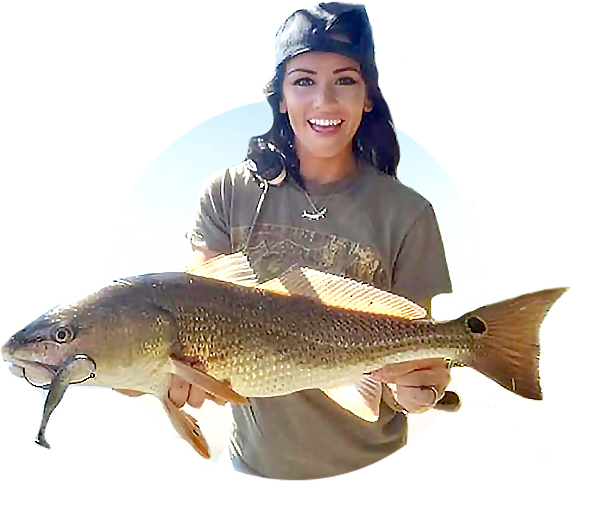
I started catching redfish almost immediately, including a beautiful 29-inch fish!
And the action didn’t stop there.
Straight Retrieve vs. Twitch Retrieve
Choosing the right lure was only half the equation.
HOW I retrieved that lure was just as important.
When the water was calm and the fish were spooky, I kept my rod tip relatively still and used a slow, steady retrieve.
No aggressive jerks.
No unnecessary movement.
Just a subtle presentation that allowed the lure to move naturally through the water.
I’ve found that this straight-retrieve approach can be incredibly effective when fish are finicky.
But later in the morning, something changed.
The wind picked up, the water started moving, and visibility decreased.
So I started adding more action to the lure.
First, I introduced a little rod movement.
Then, as the water became more churned up, I switched to quicker twitches.
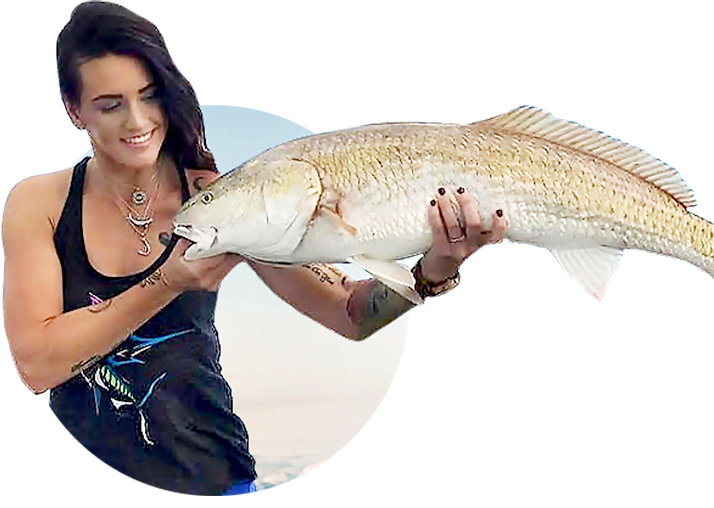
And that’s when I hooked into the biggest fish of the day… a beautiful snook!
The takeaway?
- Calm water + spooky fish: Start with a slow, straight retrieve and minimal vibration.
- More wind + moving water: Experiment with adding twitches and additional lure movement.
You don’t always need a different lure.
Sometimes you just need to change how you’re working it.
Don’t Give Up on a Good Fishing Spot Too Soon
One of the most important decisions I made that morning had nothing to do with tackle.
It was deciding to stay in an area where I knew fish were present.
I made multiple passes through the same zone.
The first pass produced nothing.
The second pass, with a different lure, produced some excellent redfish.
And after adjusting my retrieve as conditions changed, I eventually landed some really nice snook, too.
I even had a monster trout swipe at my lure right beside the boat!
Although I never landed the big trout I was targeting, the trip turned into an incredible morning.
Same fishing spot. Different presentation. Completely different results.
That’s why I always encourage anglers to pay attention to the conditions and how fish respond before abandoning an otherwise promising area.
Final Thoughts
Hard plugs can be incredibly effective during twilight hours.
But they’re never a guarantee.
This trip was a perfect example of why choosing the right lure for the conditions matters more than simply fishing during the “perfect” time of day.
I started with zero catches during what should have been prime feeding conditions.
Then I switched to a low-vibration soft plastic jerk lure, returned to the exact same spot, and ended up catching some beautiful redfish and snook.
And as conditions changed, adjusting my retrieve helped keep the bites coming.
For a deeper breakdown of when each lure style performs best, check out my Advanced Lures Lesson inside the Salt Strong Fishing School.
Have you ever switched lures and immediately started catching fish in an area you thought was dead?
Let me know in the comments!
Frequently Asked Questions
When should I switch from topwater plugs to soft plastic lures?
Consider switching when fish are following or striking your plugs without committing, especially as the sun rises and the water becomes calm. A soft plastic jerk lure can provide a more subtle presentation that helps trigger strikes from spooky fish.
Should I twitch a soft plastic jerk lure or use a straight retrieve?
It depends on the conditions. In calm water with finicky fish, I prefer starting with a slow, straight retrieve. As wind and water movement increase, adding twitches can help attract more attention.
Can soft plastic jerk lures catch redfish, trout, and snook?
Absolutely! During this trip, I caught redfish and snook using the Polk County Tweaker and even had a monster trout strike near the boat. It’s one of my favorite lure styles for targeting multiple inshore species.
What color soft plastic works best on sunny days?
I’ve had excellent results with Black Ice, especially during clear, sunny conditions. Its dark profile has become one of my favorite options when targeting redfish, snook, and trout.



Very impressive video, you showed how patience and mixing up the lure selection payed off. Thank you for sharing Luke
When you fishing weedless do you have to set the hook side was because I have missed all my straight up sets please help
With weedless rigs, it’s most important to set the hook quickly and with force… I typically do it from the side simply because I can get a lot of rod tip movement simply by rotating my body which helps compound setting the hook with my arms.
If you’re missing many hooksets, an easy fix could be to use a stronger rod… definitely do not go with medium light rods when using weedless lures because they are often too slow/weak to get a good hookset consistently.
I am so glad Charles has that question. I fish with my neighbor who’s been fishing most of his life when we’re out on his boat he keeps telling me pull straight up and I miss more than he does. Of course he’s not a salt. Strong member doesn’t agree with it when I go on my own I always jerk to the side to come and have it and I seem to do better never thought that one would work better than the other. I just been doing it right by making mistakes lol thank you for that question
Getrdone Luke, very nice video!
Thanks Stan!
Nice video Luke! I can’t wait to get back out on the Indian River. – Wes
Glad to see that you enjoyed this video Wes
Very helpful video Luke. Thanks.
Our pleasure Bob!
Great fish on this trip Luke. Way to stay patient and stay with it!
Thanks Gary!
Great video Luke!
Would you coaches please let us know where you are fishing? I know no one wants to give up their best spots, but something a bit more than “”I’m on the East Coast in the Indian River” would be nice for all of us. Something like “I’m here in Merritt Island this morning fishing the Indian River” would allow us to follow and hopefully get more excited to go fish that general area.
Scott
I launched from Sebastian this trip. The bite should be getting very good up and sown the entire Indian River now that the mullet run is getting started.
Great video, Luke! Thanks for sharing, brother! 🎣🧂💪🏻
Our please James!
Well Luke until the water really starts cooling off im still night fishing because this summer has been the best summer I ever experienced in night fishing no fishing pressure and lots of hungry active fish so until its REALLY fall in florida and not just a few cool days now and then this heat hating yankee is sticking to the night time in fact the only time I start wearing those long sleeve shirts that all you central and southern Florida anglers seem to wear all year long is when it starts getting cold and I mean daytime temps at the most in the high 50s to low 60s when im not sweating anymore then its time for me to slow down and do some daytime fishing but until then its night time for me and as far as soft plastic jetkbaits go I may use them on occasion when everything else fails me but being the fishing conditions are very different from central and south and the gulf coast of Florida only on occasion do I find them productive because most of the year its murky water a quiet soft plastic stickbait usually doesn’t get the dishes attention where a bait with more vibration and sound will not until the winter around here do I find they work somewhat well but thats what I have experienced and only mention what works for me for you or others its different thanks for your input and all you do😉🤔