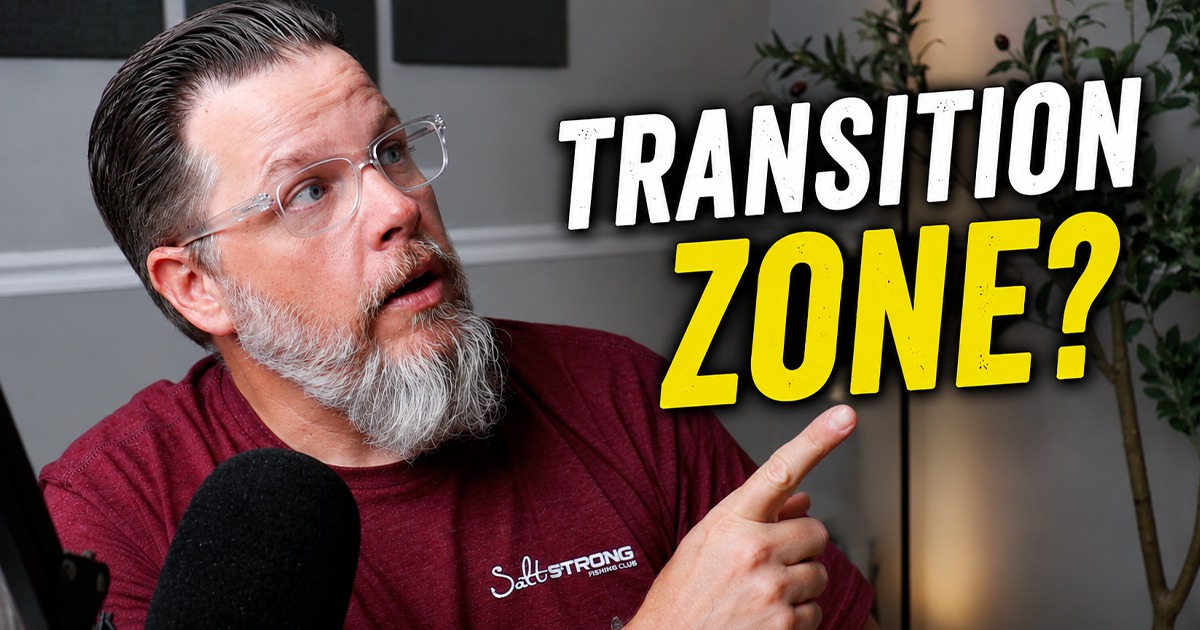
If you’ve ever watched a fishing video and heard someone say, “Fish the point,” “Work the drop off,” or “Target the drain,” you might have wondered…
What does that actually mean?
The truth is, these aren’t just fishing buzzwords.
They’re names for the features that consistently hold fish.
Once you understand what they are and why fish use them, you’ll start looking at the water completely differently and finding better spots before you even make your first cast.

Featured Software:
The 10 Fishing Terms Every Angler Should Know
In this video, Coach Pat breaks down ten of the most common terms you’ll hear inshore anglers use, including:
- Points that funnel bait into predictable feeding lanes.
- Drop offs that let fish move between shallow feeding areas and deeper water.
- Flats where fish feed during the right tides and conditions.
- Transition zones where different bottom types or depths meet.
- Potholes that create natural ambush points.
- Oyster bars that attract bait and predator fish year-round.
- Grass lines that define productive feeding edges.
- Drains where moving water carries bait directly to waiting fish.
- Pinch points that increase current and concentrate feeding activity.
- Current breaks where fish conserve energy while waiting for food to drift by.
Each one plays a different role, but they all have one thing in common:
They help concentrate fish.
The Simple Formula For Finding Better Fishing Spots
You don’t need to memorize every fishing term to become a better angler.
Instead, look for areas that combine these three ingredients:
- A change in depth
- A change in bottom composition
- Moving water
When multiple features overlap in one location, your odds of finding feeding fish increase dramatically.
That’s why experienced anglers spend so much time looking at maps and reading the water before they ever make a cast.
Final Thoughts
Learning fishing terminology isn’t about sounding like an expert.
It’s about understanding why fish position themselves where they do.
Once you know what these features are, you’ll spend less time guessing and more time fishing productive water.
Watch the video above, then let us know in the comments:
What fishing term confused you the most when you first started?



Thanks for the information Pat.
Great video, thanks Pat!
I dress with the slick as much as possible and turn the drilling motor off and try to stay away from it. If it looked like about a 5 gallon bucket is just starting haven’t seen anything smaller than that, but it gets to be 4 or 5 feet wide. It’s the end of the slick wouldn’t stop fishing until I couldn’t get a bite again. I always fish the side of the slick not straight into it, larger petal. Bye, for now, I like to have you guys response.See what you say thank you for posting.Thanks, Pat, we really do appreciate you.Thanks for being you
When the birds are feeding and the fish are feeding everybody throws into that feeding area, I always put a heavier weight on and try to get to the bottom because I know the bigger fish are in the bottom, I’ve caught plenty of bigger fish when everybody else is hitting us. Small ones are on the edge of it, they’re feeding fish that’s worked for me. I don’t know if it works for everyone. But it works in Alabama.\nBecause anybody else tried this
Very helpful terms. I find myself forgetting or ignoring some of these areas to fish and videos like this help me a lot! Thank you, Pat.
Very good video thanks
Glad you liked it and thanks for watching!
Great summary Pat. Thanks
Thanks Jeff!
thank you for the awesome tutorial Pat.
Thanks Daniel!
I look for these ALL THE TIME 🤜🤛….and based on most of my start locations, those spots are usually taken by the time I get there. It’s certainly a challenge
The challenges are real Dave!
While im not good at understanding computor jargon I do understand fishing terminologies considering I have been a general overall angler that is both fresh and inshore saltwater now for 57 plus years and 23 going on 24 for inshore saltwater but you are correct in that they are important to know I should also add that most of these terminologies are also used in freshwater and not just the saltwater thanks for the input and all you do😉👍
Yes sir! I learned most of these in my bass days but they definitely cross over!