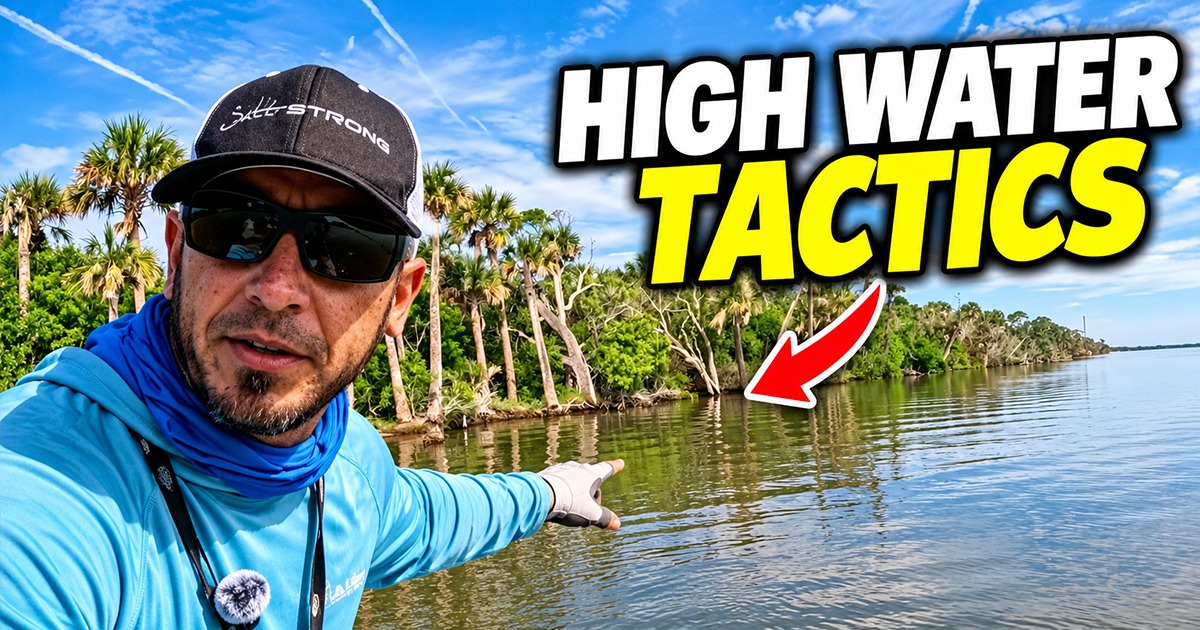
Water levels are HIGH across a lot of the Southeast right now.
And when all that extra water floods shorelines, grass, trees, and creeks, the fish suddenly have a whole lot more territory to explore.

That can make them tougher to find.
But there’s one simple rule I use to adjust.
Here’s what that looked like on my latest trip.

Featured Gear
- Rod: Slot Machine Medium
- Reel: Otis 2500
- Lure: 2.0
- Hook: Hoss Helix Hook 3/0 1/8oz
- Mainline: Diawa J-Braid 10lb
- Leader: Ande 15lb Mono Leader w/30lb Tippet
High Water Opens Up New Feeding Areas
When water levels rise, fish can reach areas that normally aren’t available to them.
That includes flooded grass, mangroves, trees, shoreline cover, and areas farther back inside creeks.
So if I’m fishing water that’s noticeably higher than normal, one of the first things I’ll do is move tighter to the shoreline.
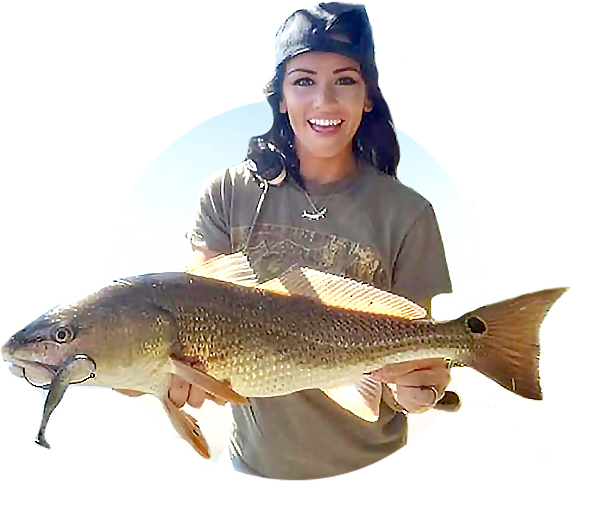
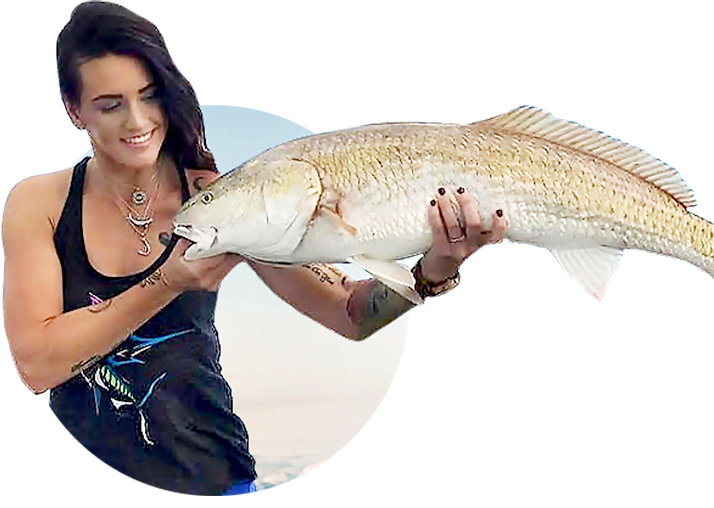
On this trip, that paid off with a solid redfish sitting right along a flooded treeline.
The important part is not simply fishing “shallow.”
It’s recognizing that the productive edge has moved.
Look for Shorelines That Keep Fish Within Reach
Not every flooded shoreline is equally easy to fish.
If high water extends 20, 30, or 50 feet back into heavy cover, fish may push so far back that you can’t effectively reach them.
I prefer shorelines where the water has risen into cover but there is still a defined edge I can target.
That concentrates the fish into a smaller area and gives me a much better chance of putting my lure in front of them.
The same idea applies to flooded grass and creeks.
If the water gives fish access to a new feeding zone, expect at least some fish to take advantage of it.
Follow The Water
This is the simplest way I think about changing water levels:
Water comes up, I move up.
Water goes down, I move out.
When water levels are low, many of those fish are forced away from the shoreline and into slightly deeper water.
When the water comes back up, those same fish can move right back into areas they couldn’t previously access.
Instead of fishing the exact same spots regardless of the conditions, adjust with the water.
Don’t Get Tunnel Vision
High water doesn’t mean EVERY fish will be buried against the shoreline.
That’s something this trip reminded me of pretty quickly.
While I was focused on the flooded cover, I spotted a speckled trout cruising through floating grass roughly 20 feet away from the bank.
A quick cast in front of him produced another quality fish.
So even when you have a strong pattern going, keep scanning the water around you.
Look for wakes, nervous bait, movement through floating grass, and anything else that might give away a cruising fish.
Sometimes the best opportunity is sitting right next to the spot you’re focused on.
Find The Productive Water Faster
One of the challenges with unusually high water is simple:
There’s more water for the fish to use.
And if you haven’t been on the water recently, figuring out where the fish have moved can take a lot of time.
That’s where current fishing reports, recent community intel, and Smart Fishing Spots can help narrow down the search before you ever launch the boat.
Instead of blindly covering miles of shoreline, you can start by identifying the areas that give fish the right combination of structure, depth, current, and feeding opportunities for the conditions you’re dealing with.
Final Thoughts
High water doesn’t necessarily make the fishing worse.
It just changes where you should be looking.
If water is flooding new shoreline, grass, or creek habitat, start by following it and looking for fish that have moved into those new feeding zones.
But keep your eyes open.
As that trout proved, they’re not all going to be against the bank.
Are you seeing unusually high water where you’re fishing right now? And where have you been finding the fish?
Frequently Asked Questions
Where do redfish go when water levels are high?
Redfish will often move into newly flooded shoreline habitat, including grass, mangroves, flooded trees, creeks, and other shallow feeding areas that aren’t accessible during lower water.
Should you fish closer to shore during high water?
Often, yes. Rising water can allow baitfish and predators to move closer to shore and farther into flooded cover. Focus on areas where fish can access the new habitat without moving so far back that they’re impossible to reach.
Is high water good for inshore fishing?
It can be. High water creates new feeding opportunities for redfish, speckled trout, snook, and other inshore species. The challenge is that fish also have more available habitat, so locating them can take more effort.
What lures work well during high water?
Paddletails are a great option because they allow you to cover water efficiently and can be worked around flooded shorelines, grass, and other shallow structure. I used the Slam Shady 2.0 paddletail successfully on this trip.
Should I only fish flooded shorelines during high water?
No. Flooded shorelines can be productive, but fish may still cruise farther away from shore. Keep watching for bait activity, wakes, floating grass movement, and visible fish while you’re working the shoreline.



Good stuff, thanks Tony!
You’re welcome J.D!
Tony, I have learned so much from you and this video really is going to help me. Thanks
Thank you for the great feedback Leo! My pleasure!
These Videos make me feel like I’m fishing. Keep them coming Tony! I personally like fishing high waters. Makes it much easier to keep moving around.
For sure! With all the grass now as well it’s nice to be able to actually move around again.
Common sense goes a long way !
For sure!
Nice video great information. I’m trying to learn as much as I can as I go you guys do a great job.
Thank you for the great feedback Jesse!
Your absolutely right Tony high water can and sometimes is a great time to fish inshore saltwater but like you said one has to look for cover and structure features like edges and grass line changes in fact the best day I ever had fishing for flounder was on a very unusually high tidal day where the water level was about 4 feet above the normal high tide and the flounder were stacked up along a grasslined bank that had a mix of both shell and sand with scattered oysters they were all laying very close to the edge where the grass came in contact with the shell amd sand I limited out that day with 10 flounder and only 2 were not legal and just to mention this was a couple years before the states flounder regulations changed where back then there was NO closed season and they only had to be 12 inches long with a limit of 10 bag limit all caught on my zman spinnerbait with a black and chartruse tail 4 inch gulp paddletail and not to mention on how sad the fish and game changed the rules letting the real culprits of our flounder stock decline the commercial giggers still gig ALL YEAR LONG while us recreational anglers that get lucky if we catch more then 3 the season is closed for 6 weeks kinda really bad management there I would say and there excuse being that the fish and game didnot think that the commercial giggers would have that much effect on our stocks? Really maybe we need to vote for a new fish and wildlife director because this one really dropped the ball but it is what it is thanks for your always valuable info as usual Tony and all you do🤔
You’re welcome Steven and thank you for the great feedback!
Great Tutorial, Tony! And Very Nice Trout!
Thanks Barry!
Thanks Tony, great info and video!
You’re welcome Stan!
Thanks coach. Some great insight to keep in mind.
You’re welcome Troy!
Thanks Coach for another informative video.
You’re welcome Terry!