Most inshore anglers know when high tide and low tide are going to happen.
But knowing WHEN the tide changes and knowing HOW to actually fish the tide are two completely different things!

As the water moves, bait moves, fish reposition, and the spot you’re fishing right now might be completely wrong an hour from now.
I’ve seen anglers make the same mistakes over and over again when fishing changing tides.
So in this video, I’m breaking down 4 common tide fishing mistakes that could be costing you fish and, more importantly, what you should be doing instead!

Plan Smarter. Catch More Fish!
Having a game plan BEFORE you hit the water already puts you one step ahead!
Use Smart Fishing Spots to check tides, explore promising areas, and plan your next trip with confidence.
Then, once you’re on the water, combine that game plan with these 4 tips to adapt to changing conditions and give yourself a HUGE advantage!
Mistake #1: Fishing the Tide Chart Instead of the Water
I use tide charts all the time. They’re great tools for planning a fishing trip.
They give me an idea of when the water should be rising, falling, and reaching high or low tide.
But here’s the important part:
A tide chart is a prediction, NOT a guarantee of what’s actually happening on the water!
Wind, offshore storms, rainfall, and freshwater runoff can all influence water levels and conditions.
If my tide chart says the water should be falling, but I get to my fishing spot and the water isn’t moving yet, I’m going to fish what I actually see.
There are a few simple things I look for:
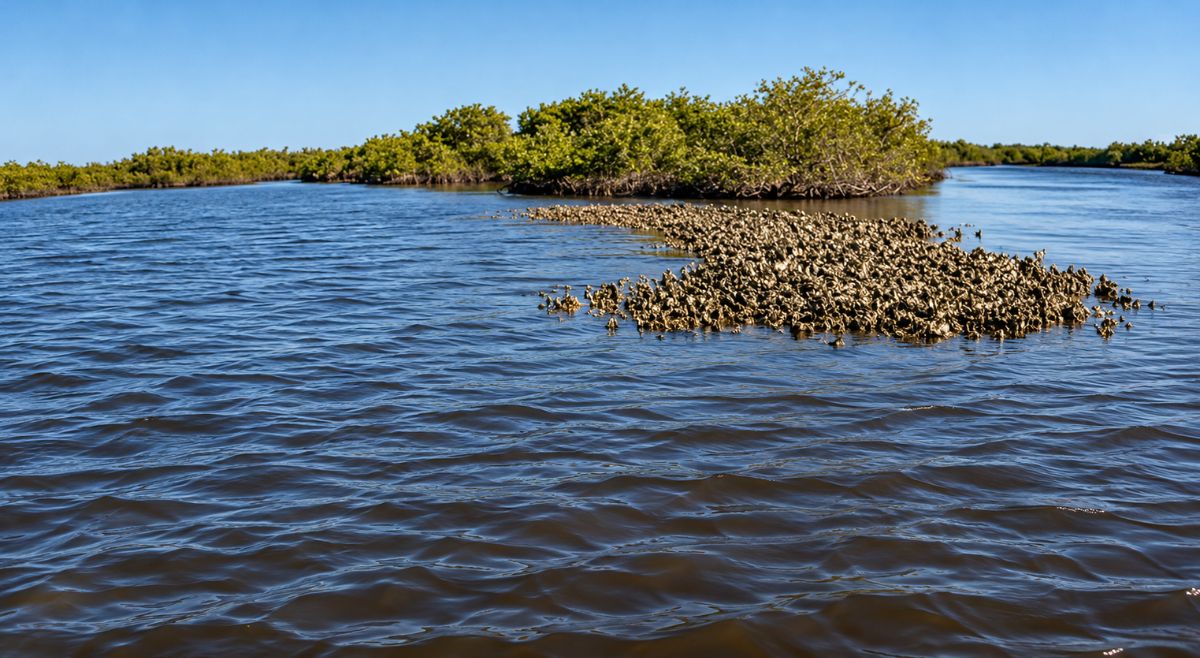
- Oyster bars and shoreline grass: Is the water covering or exposing them?
- Floating grass and debris: Which direction is the water carrying them?
- Points, docks, and creek mouths: How is the current moving around the structure?
I’m really trying to answer three questions:
- Is the water rising or falling?
- How much is it moving?
- What is that movement doing to the area I’m fishing?
The takeaway: Use tide charts to PLAN your trip, but let your observations on the water determine WHERE and HOW you fish.
Mistake #2: Not Moving With the Water
This is probably the BIGGEST mistake on my list!
I see anglers find a productive fishing spot, catch a few fish, and continue fishing that same exact spot as the tide changes.
Eventually, the bite stops, and they assume the fish are done feeding.
But that’s not necessarily what’s happening.
Those fish might not have stopped feeding. They might have just MOVED!
Let’s say you’re fishing a grass shoreline near high tide.
There are redfish feeding tight against the grass, and you’re getting bites.
As the tide begins falling, those fish might stay along that shoreline for a while.
But eventually, the water gets too shallow, and they have to reposition.
They might move toward:
- The outer edge of a flat
- A nearby trough or depth change
- A creek mouth or drain pulling bait out
- Another area with enough water to continue feeding
That’s why I like breaking incoming and outgoing tides into early, middle, and late stages.
An early outgoing tide might leave plenty of water along a shoreline, while a late outgoing tide could leave that same shoreline almost completely exposed.
Both are technically outgoing tides, but they’re very different fishing situations.
So when the bite stops, don’t immediately assume you need to find an entirely new fishing spot.
Instead, ask yourself:
Where would these fish logically move as the water level changes?
Sometimes you don’t need to find new fish.
You just need to FOLLOW the fish you’ve already found!
Mistake #3: Assuming Stronger Current Is Always Better
We’ve all heard that moving water is good for fishing.
And generally speaking, I agree!
But that doesn’t mean I want to find the strongest current possible and cast my lure right into the middle of it.
What I’m really looking for is somewhere that moving water creates an easy feeding opportunity.
Think about an oyster bar with current flowing around it.
The structure interrupts that current, creating faster-moving water on one side and a slower pocket behind it.
Predator fish can use that slower water to conserve energy while the current delivers food nearby.
That’s exactly the type of feeding opportunity I want to find!
Different species can also position differently around current.
For example:
- Snook, trout, and flounder often take advantage of faster-moving current.
- Redfish may position in slower, calmer areas where they can feed without fighting strong current.
I look for these opportunities around oyster bars, points, islands, grass lines, creek mouths, docks, and depth changes.
Instead of asking where I can find the strongest current, I ask:
Where is this current creating the EASIEST feeding opportunity?
Because fish are predators. If they can conserve energy while food is being delivered right to them, that’s a pretty good place to start fishing!
The takeaway: Don’t assume stronger current automatically means better fishing. Look for productive current and pay attention to how it interacts with structure.
Mistake #4: Giving Up When the Tide Goes Slack
You’ve probably experienced this before.
The water is moving, you’re catching fish, and everything seems to be going great.
Then the current starts slowing down.
Eventually, it almost completely stops.
And so do the bites!
It’s easy to assume the feeding window is over.
But here’s something I want you to remember:
Slack tide isn’t necessarily the END of the bite. It’s a TRANSITION!
There are still situations where fish will feed even without much current.
For example, during high slack tide, redfish might continue feeding across a flooded grass flat.
During low slack tide, those same fish might become concentrated in deeper pools after the surrounding water drains away.
But here’s another important thing to consider.
When the tide goes slack, the water is getting ready to move in the opposite direction.
That’s going to create an entirely new fishing situation.
Instead of sitting in the same spot waiting for the bite to return, I start thinking about what’s coming next.
- Where will the water move when the tide turns?
- What areas will become available?
- Where will the bait likely reposition?
- Which areas will create the next feeding opportunity?
Maybe I’m fishing a point during an outgoing tide, and the bite suddenly slows.
Instead of continuing to cast to the same place, I’ll think about how that point is going to fish when the current reverses.
Maybe the productive side of the structure changes.
Or maybe there’s another nearby spot that sets up much better on the incoming tide.
The key is to get into position BEFORE that next feeding opportunity develops!
So don’t automatically interpret slack tide as the end of your fishing trip.
Use it as an opportunity to prepare for what’s coming next.
Final Thoughts
All four of these mistakes come back to one important idea:
Fishing the tides isn’t just about knowing WHEN the water moves. It’s about understanding WHAT that movement does to the fish!
Use tide charts to plan your trips, but pay attention to what’s actually happening once you’re on the water.
Follow the fish as water levels change, look for productive current around structure, and use slack tide to anticipate the next feeding opportunity.
Instead of just asking yourself when high or low tide will occur, ask:
What is the water doing to the fish RIGHT NOW?
Once you start thinking that way, you’ll have a much better idea of where you should be fishing.
I hope these tips help you make better decisions and catch more fish on your next trip!
What’s your favorite stage of the tide to fish? Incoming, outgoing, high, or low?
Let me know in the comments below!
Frequently Asked Questions
Is incoming or outgoing tide better for inshore fishing?
Both can be productive. I focus more on how the moving water affects bait and fish positioning than whether the tide is simply incoming or outgoing. The specific stage of the tide and the surrounding habitat can make a big difference.
Can you catch fish during slack tide?
Absolutely! Fish don’t necessarily stop feeding when the current slows. Redfish, for example, may continue feeding on flooded grass flats during high slack tide or concentrate in deeper pools during low slack tide.
Is stronger current always better for fishing?
Not necessarily. I look for areas where current creates an easy feeding opportunity, especially where moving water interacts with structure. The strongest current isn’t always where the fish will be holding.
Why do fish stop biting when the tide changes?
Sometimes they haven’t stopped feeding at all. They’ve simply repositioned as water levels change. Before leaving an area, check nearby depth changes, troughs, drains, and other places those fish could have moved.
How accurate are fishing tide charts?
Tide charts are useful planning tools, but conditions like wind, offshore storms, rainfall, and freshwater runoff can affect actual water levels. I always compare tide predictions with what I’m seeing on the water.



Pat, is there ever a situation in which you may be setup up-current and casting so that your bait is moving against the current? or must you always setup down current with your bait flowing with the current?
Spot on Pat in my nearly 24 years of inshore saltwater fishing i have found that tides are extremely important in the success or failure of an angler one needs to learn the different tidal phases also being able to learn from experience on how the fish position to feed in each tidal phase I like you also only use the predicted tides as a general guideline in my Fishing planned trips because over the years I have experienced some strange things happening during some time phases I have come to areas where the tide should be incoming but the water movement says otherwise I have also seen very late tide phases where the prediction said that high or low should be at a maxed hight only to not top or bottom out for hours after the prediction so like you said it’s should only be used as a guideline and NOT used until your on the water to visibly verify what the water movement is actually doing and sometimes it can be very frustrating to make plans but the tidal phase is not doing what it’s predicted to do great info Pat thanks for this valuable Intel and all you do😉👍
Thanks Pat. This info is extremely valuable, especially to newbies! Takes a lot of time to learn this on the water! It’s great someone just learning and even us old guys have this info stored in our makeup of how to make this sport more enjoyable!
Do tide changes matter much when fishing around bridge pilings where the bridge sits between the back bays and open Gulf or Ocean water ?
More knowledge = more fish!
Great video learned a lot thanks
Great advice pat 💪
Another excellent report Pat. It reminds us to think about the next logical step.
Thanks, Pat. Reading the current structures and columns and thinking like a fish gives us knowledge to find spots that they can hide in for safety. Be the fish whisperer!
Thanks Pat, excellent post opening up possibilities as we seem to struggle at the tide changes. Those first and last hours of the tides are one of my favorite times to fish.