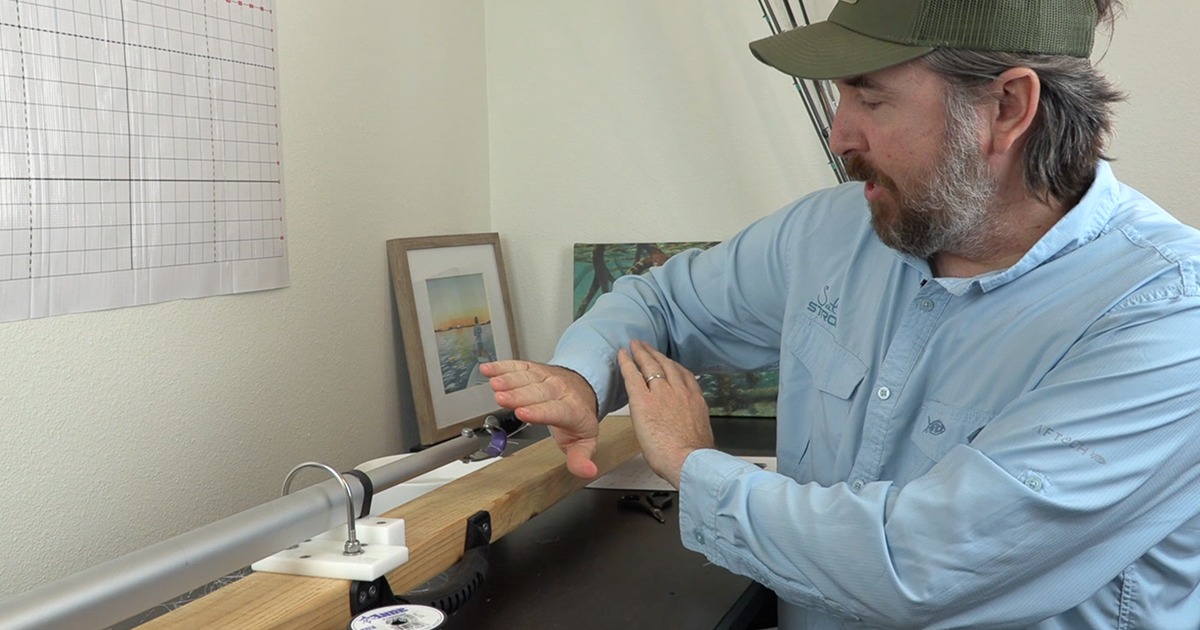
Most knot debates never get settled because no one actually tests them.
So when members asked me about the Toit Knot, I decided to stop guessing and put it head to head against the Improved Trilene Knot, which has been one of our top knots for both mono and fluorocarbon.
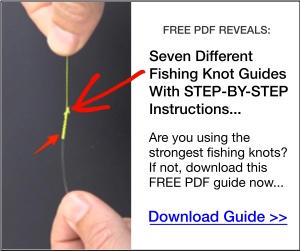
Same line.
Same setup.
Head-to-head.
The results were not what I expected.

Featured Gear
Head-to-Head Results (Which Knot Lost First)
This table simply shows which knot broke first in each test. These are not averages or opinions, just head-to-head wins and losses. With monofilament, the results leaned heavily one way, especially when knots were tied dry. You can see which knot consistently failed first here.

Breaking Strength of the Losing Knot
This table adds context to the losses. Even when a knot failed first, the breaking strength shows how close it came to full line strength before breaking. Dry versus wet made a noticeable difference, particularly with monofilament, while fluorocarbon stayed more even. This helps explain why a knot lost, not just that it lost.

Final Thoughts
This test did not suddenly make the Improved Trilene Knot a bad knot. It still works. But based on this data, the Toit Knot earned a spot when strength and consistency matter, especially with monofilament.
For me, this was another reminder that testing beats tradition every time.
The Trilene Knot ranked as our strongest snug knot before this test. Check out all the knot rankings from strongest to weakest here.
Which knots should I put head to head next? Let me know in the comments.
IMPORTANT REMINDER
The 2 core benefits we promise to Insider Club members is to be able to find and catch fish easier than ever before while saving money on fishing equipment.
So I am including links to the quickest ways to achieve each:
1) Finding Fish System
2) Insider Club’s Group Discounts



Very interesting! I do have 2 questions; where does the line break? Internal to the knot or where the knot meets the line? Is the break point different between saliva and dry?
It’s tough to tell exactly where in the knot the break occurs. Most of the time, the knot that broke falls off of the swivel which makes me believe that the break occurs right at the top of the swivel where the line is constricted before going around the swivel.
The other times when the broken knot is still holding onto the swivel after the break, there is not any tag end sticking out so the break happening at some point from the swivel to the top of the knot.
Good question about break point between dry or wet… I haven’t noticed a difference, but I haven’t been looking for that in particular. I’ll be sure to check for that going forward.
Love the Salt Strong videos etc, but I’m pretty sure that the correct/proper pronunciation of the abbreviation ‘vs’ is ‘versus’ not ‘verse’.
Thank you for your attention to detail.
Thanks for the helpful clarification… this is one of many examples showing why I’m a fishing coach and not a grammar teacher.
Luke,
What would the test strength be if you were to tie the same 2 knots to 20 lb braided line? Like a leader line used in mono etc.
Great test to see just wondered the results might be?
Bill
Great question. Braid is very different line, so that’ll require another experiment.
I love all of the knot tests! I see that your tests compare dry vs spit, but what about the real world situation where you change lures and have Dr. Juice on the leader? How well does the knot hold with the oil on it? I wondered about this when I lost a big catfish at the boat and found that my knot came untied and had catfish slime all over it!
A good knot will hold up with or without saliva, so I don’t think a little oil will be much of a factor assuming you’ve at least wiped the Dr Juice off of our fingers before trying to to a knot (not doing so would make it tough to control the line).
Thanks, at age 75, I no longer have fingerprints so it is already hard to control the line! I mostly use the knots to attach the thin clip that I have started using. I was worried about how thin it was so I tested it with 60# line. The clip deformed at 29# and the line broke at 51#. The clip did not fail!
You really feel like the Toit is significantly stronger than the basic four to five twist Clinch Knot? The latter is certainly quicker to tie.
The fact that it beat my prior favorite knot 6 out of 8 times while also being easier to tie was definitely enough to cause me to use the Toit in the rare instances I am trying to maximize that connection… I rarely use these knots because my leader line is always stronger than my mainline, and I prefer to have my weakest point at the end (next to the lure of hook) so that I at least get my leader assembly back when I get snagged on the bottom.
Time to get adroit with the Toit !!!
Haha. Glad to see that you enjoyed this test.
thanks Luke. great tests. i didn’t see the following about a uni knot in the comments, so sorry if i missed it. ok, granted everyone has their favs, and in a perfect world we’d tie the best knot for the best case…im inshore 99% of the time. So, in reality, the ol “good enough” idea (which can be aggravating in some spheres of life!) and ease of repetition and aging 50 yo eyes… the uni knot is my go to, since you can leave a little wiggle room on tying it to the loop on a jig-head/lure so that it (supposedly) has more action, you can tie lines of different diameter and types together, its very easy to tie, one “be-all knot”, and etc…
so with that said: (in your ‘spare’ time)
1- how does the uni knot (spit lubricated version) compare in strength against the toit?
2- so you use no fluorocarbon now, wow, ok, news to me but i am game, so you use the equivalent of mono instead? like if a 25lb leader in floru was before you would just use 25lb regular mono?
3- so flouro isnt less visible to the fish than mono is, as we were told?
thanks again, and for all the other commenters here on this page too, good to read their ideas as well.
1) I haven’t tested those two lines together, but I’ll at least give an educated guess that the Toit knot would be stronger than the uni by roughly 5% (both are great knots).
2) Yes, I went a couple years going back and forth with mono and fluoro after getting shocked by tests that showed the mono being much better at handling abrasion. And after using both interchangeably for a while, I couldn’t tell a difference in strikes per hour of fishing so I made the full switch over the mono since it’s provably stronger while having no noticeable downside performance on strikes. When I switched back and forth from mono to/from fluoro, I would go a step down for mono so that the diameters were equal (so situations where I’d use a 20 lb fluoro, I now use a 15 lb mono).
3) Correct… that all seems to be made up marketing hype used to boost up the price of fluoro. There are many people who report that they get more bites with fluoro, but that’s undoubtedly due to the fact that fluoro is set to be slightly thinner than mono which will increase strikes.
appreciate the reply and added details, Luke! TY
I would love to see you test Ande Backcountry blue line against any of the other lines you currently use for either main lines or leaders in the same pound test. I have used Ande Backcountry for both my leaders and main line when using a copolymer/ mono line as my main line for decades, since Ande first came out with it. Ande claims it’s more abrasion resistant, softer, with less memory, etc, and I’ve found that to be true in my use. I field-tested for Ande back when this line was in the process of an experimental line, and then it became mainstream and went to market. In my opinion, it has a bonus as well. I can’t see it in the water.
I’d like to see that also Ray, prior to braid, Ande was THE line for me in fresh & salt.
Which sized line spool do you get? Looks like they have a couple options of the backcountry lines.
Great info Luke.
Thanks Jeremy!
I have started tying a knot that I saw online that is similar to these, but easier for me to tie and cinch. If you go to your video at 2:42 into the video (i.e. after going through the eye twice) and from there wrapped your tag end four times around the loop at the base of the loop (i.e. where you are holding the lines together), then go through the loop from the top before cinching you will have tied it. I couldn’t find a name for this knot. I wonder how it compares. It is very similar to them.
Are you saying that you simply go through the eye of the hook twice, and then go through that loop once?
Yes to “eye of hook twice”. No to next step being through that loop once. Before going through the top of that loop once you do 4 or 5 turns around the base of the loop where you are holding it near the hook. Thinking about it – it is similar to a clinch knot once cinched except that the final tag is cinched on the top of the knot instead of near the eye of the hook.