
Winter flats fishing can be incredibly rewarding once you understand what actually makes one area fish better than another.
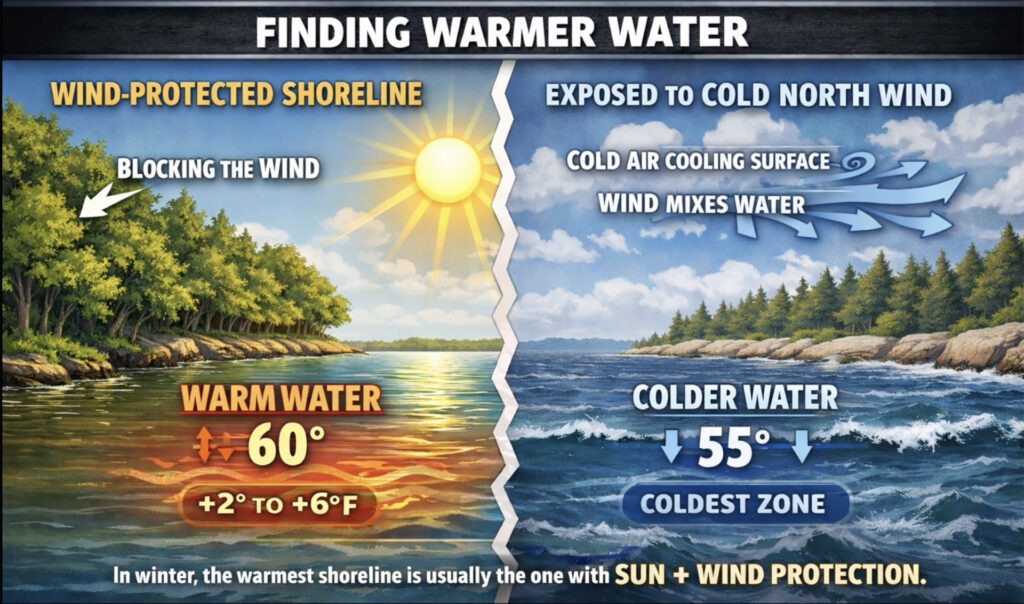
Too often, anglers start looking for warm water after they’re already on the flat, and that’s when the day begins slipping away.

I’ve learned that you can often call your shot before you ever leave the ramp if you know which patterns and visual clues actually matter.
Sometimes it comes down to ONE small difference, just a few degrees in water temperature.
I made this video to break down how you can spot that difference ahead of time.

Featured Gear:
- Rod: Slam Stick Medium
- Reel: Otis 2500
Featured Software:
Key Takeaways:
- Winter flats success is more about where than how
- Small environmental differences matter more in cold conditions
- Fish location in winter follows patterns, not randomness
- The best winter areas often share repeatable characteristics
- Planning before the trip can save hours on the water
Final Thoughts
Winter doesn’t shut fish down; it just narrows their options. When you start recognizing why fish choose certain areas over others, the flats become far more predictable. This way of thinking applies whether you fish Texas back lakes, Florida flats, or marsh systems farther north. You don’t need electronics to find warm water if you understand the clues fish are responding to. Apply this process on your next winter trip and see how quickly “tough days” start making sense.
If you could only pick ONE… are you choosing wind protection, dark muddy bottom, or sun exposure to find warmer water? Tell me why.
IMPORTANT REMINDER
The 2 core benefits we promise to Insider Club members is to be able to find and catch fish easier than ever before while saving money on fishing equipment.
So I am including links to the quickest ways to achieve each:




Good info Pat. My biggest problem is finding cold water fish. I normally fish around oyster reefs with not much mud or wind protection.
All good tips, Pat. My problem remains finding the fish. I’ve tried deep holes in the creeks leading into our bay and I’ve tried shallows in the afternoons. Da nada.
Great insight Pat! Much appreciated!
Good stuff Pat
Thanks David!
Great info, Pat! Thank you for all you do! 😎📷🎣🧂💪🏻
Happy to do it!
What James said, love your content!
Thank you for another great video, Pat. Very informative info, I struggle getting them to bite, I don’t fish slow enough yet! Still trying to control my retrieve speed in the winter.
Sometimes it’s just timing. Lately the bite has been better in the afternoon to evenings for me.
Thanks Pat.
No problem Charles!
This is excellent. Although, you just gave away a huge portion of my game plan. I have to say it absolutely works though.
Honestly in the winter this is pretty much the plan. What direction is the wind blowing and is the sun going to shine.
Incredibly simple. One follow up here, if you know day of wind/sun exposure do you factor in if that same combo has been happening the previous days or just focus on what’s happening that day to find the first groups of fish these move up shallow after cold fronts?
As the days progress, the quantity of fish should also increase and potentially even the size of the fish. The first day or so of a solid warming trend is normally the slot size reds for me. After two or three days, I start seeing the 26+ redfish.
Makes since this happens. Typically the smaller fish are more aggressive and will feed sooner.
How I will use the previous days info is see how long the warming trend has been going on. This will let me know within reason if I should expect the fish to move up sooner in the day or later. The longer the warming trend, typically the sooner the fish will move up and feed.
Thanks Pat for a very informative video. Great tips in here to hopefully improve my winter fishing. All this info is starting to make sense 🙂
Glad it’s all helping!