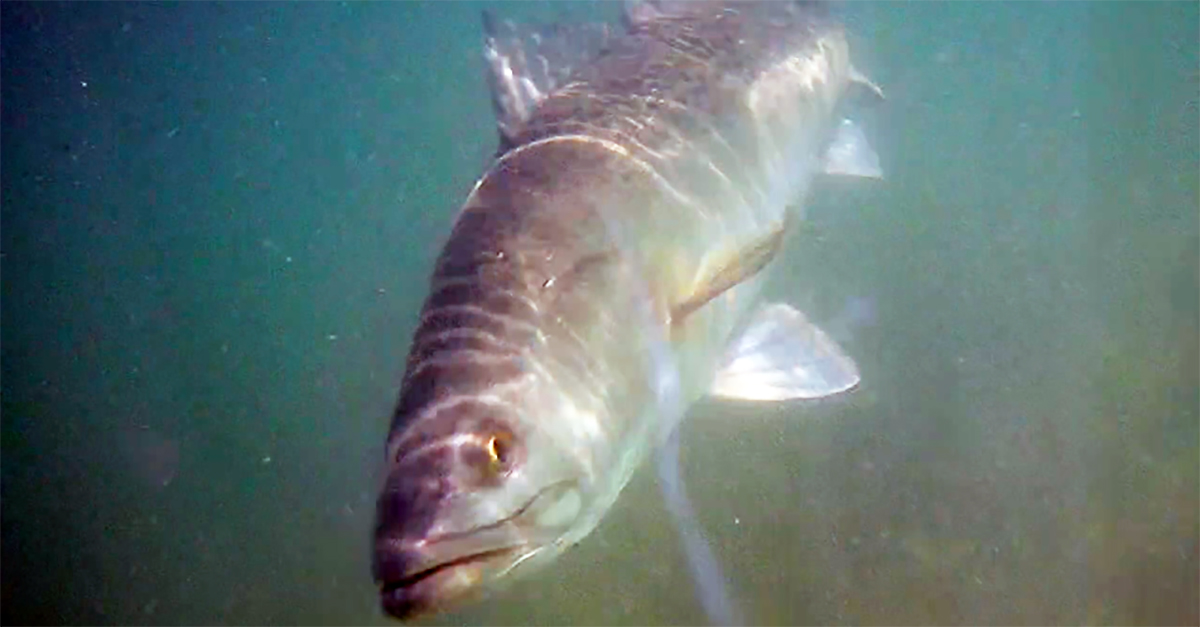
Have you ever seen what it looks like underwater when a trout tracks down and strikes a lure?
In one of my recent trips, I hooked up a camera in front of the Slam Shady and started covering grass flats.
I caught a ton of nice trout up to 24 inches on the camera rig, and the footage was amazing!
In this video, you’ll see how trout actually feed on lures so you can maximize your hook set ratio and catch more fish.
Check it out below!
How Trout Strike Lures [VIDEO]

 Click here to join the Insider Club
Click here to get a FREE pack of Slam Shady paddletails (one pack per household)
Click here to get the Slam Shady from our store
When trout are looking for food, they sit in the grass where the spots on their back let them wait in ambush unnoticed.
Then, when a fish passes above them, they’ll get behind and below it, trail it for a few feet, and then smack it.
And here are some points that make things interesting:
- It takes them less than 1/60th of a second to inhale their prey.
- They turn to the side right after they hit the lure.
- They all seem to hit the tail up with their nose.
So what does this mean?
For one, set the hook immediately because we know that they’re inhaling it quickly.
The quicker you set the hook, the less likely they are to swallow the lure and get gut hooked.
Also, setting the hook when they turn will help you increase your hookup ratio.
And two, if your lure tail is getting bitten off, it’s most likely pinfish or pufferfish, and not trout.
So if that’s happening to you, you might want to move spots.
Conclusion
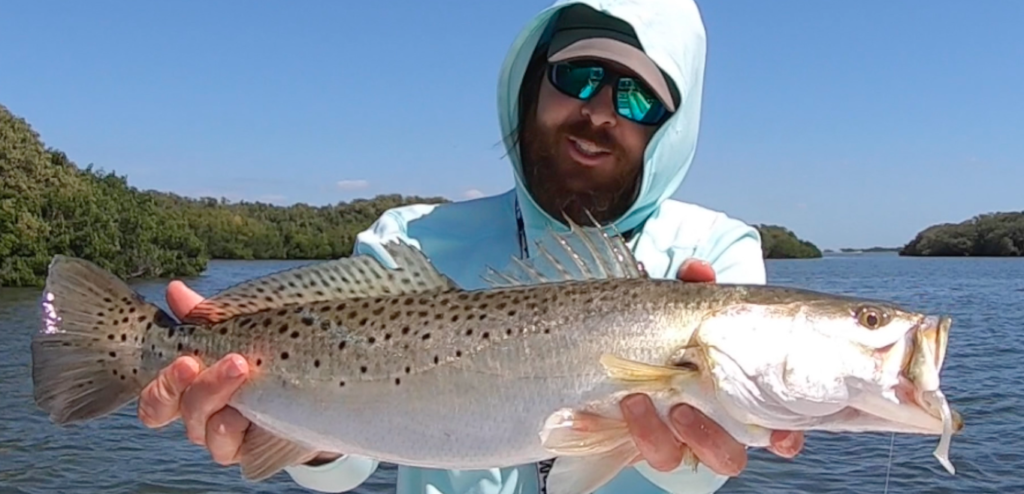
Trout are some aggressive predators!
They hit hard and fast, so be sure to set the hook quickly so you don’t miss the strike or gut hook them.
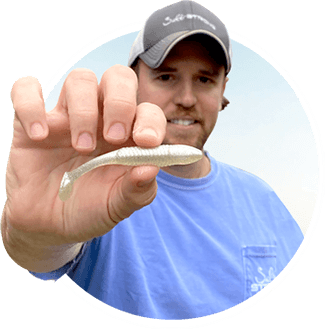
You can get the Slam Shady (the lure used in this video) from our shop here.
And if you haven’t gotten a pack yet, you can try them for free here.
Have any questions about how trout strike lures?
Let me know down in the comments!
And if you know someone who needs to see this, please TAG or SHARE this with them!
P.S. Want access to our best fishing spots and tips, plus discounts to our online tackle store? Click here to join us in the Insider Club!
Related articles:




Everything is always very educational
Interesting how nearly every strike came from behind. Isn’t that unusual for an ambush predator?
Excellent video very interesting good work
Enjoyed the video n great information
That was a great video,
Great and would love to see more underwater! I wonder if trout, facing into current, attack the oncoming lure rather than from behind as here.
It likely depends on the prey… the faster the prey, the more they have to rely on ambush which makes it tough to catch them head on.
Great footage. Question about the jig head at the end of the video though. I’ve noticed in your videos you are always using plain lead colored jig heads. I have hundreds of painted jig heads in all different colors from my walleye fishing days yet. Will my colored jig heads still work here, or do the colored ones turn off these particular species for some reason?
Although some people do claim otherwise, I haven’t yet seen evidence that the color of the jighead makes a noticeable difference in strikes. So I just stick with plain silver since it’s typically less expensive.
As seen in this video, the predator fish strike from behind so they don’t even see the jighead as they get close to it. Your colored ones should work just fine.
I also have and use different colors jigs and sometimes different colors especially green seem to help,or It could have been just timing but sometimes it doesn’t hurt the fishing
Awesome!! Great footage…keep it coming!
Interesting, it is as if they are flipping the bait so it is swallowed head first.
Awesome video,Thanks for sharing