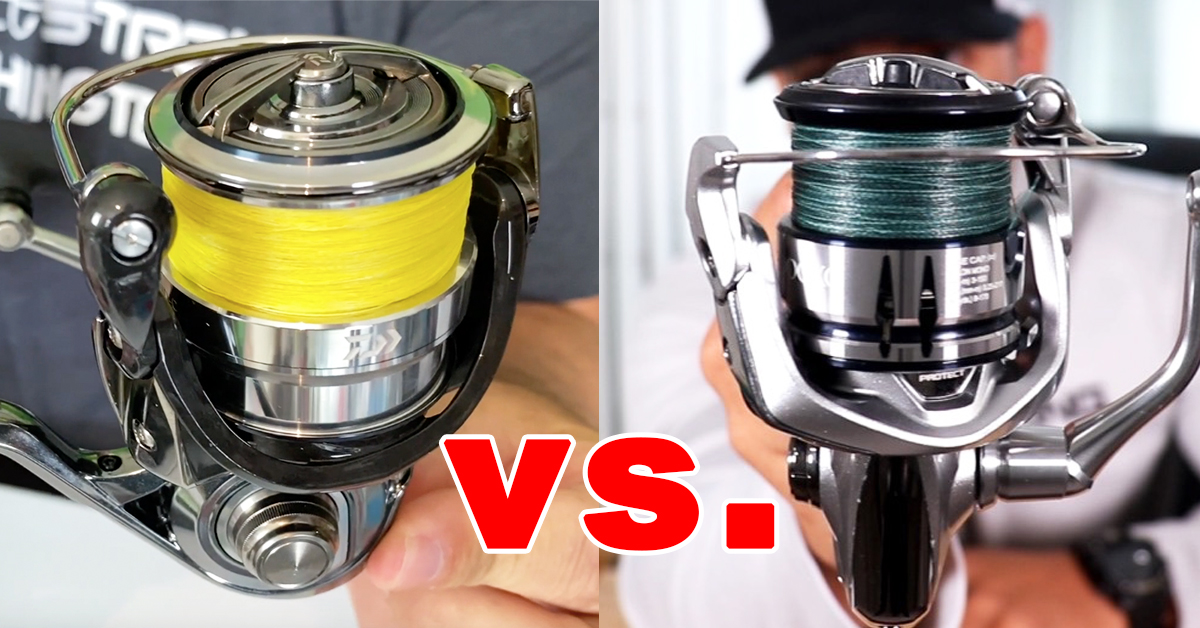
What are the differences between the various inshore spinning reel sizes?
Here’s something that’s really surprised me: reels in the 1000 class have been flying off of the shelves recently.

For years, we (and most other inshore anglers) have mainly used 2500 or 3000 series reels when inshore saltwater fishing, but this new wave of 1000 reel buyers is really coming on strong.
So what’s the big deal about 1000 series reels?
Are they better than the 2500s?
Can they still handle the redfish, trout, and snook you find in our inshore waters?
That’s exactly what we’re going to cover today as we break down the differences between 1000 vs. 2500 vs. 3000 class reels.
There are pros and cons of each size that could affect your casting ability, fish-catching ability, and even your health!
You can watch the video version of this podcast below (which I recommend since Luke does a few on-screen demonstrations), listen to the audio version by clicking the play button underneath it, or listen to it on iTunes, Stitcher, or Spotify.
P.S. Don’t forget to subscribe on iTunes, Stitcher, or Spotify and leave us a review!
Inshore Spinning Reel Sizes [VIDEO]

 Click here to join the Insider Club
Inshore Spinning Reel Sizes [PODCAST]



Note: Don’t forget to subscribe to the Salt Strong podcast on iTunes, Stitcher, or Spotify and leave us a review!
Click here to join the Insider Club
Related Podcasts:
- WHAT IS THE BEST SPINNING REEL SIZE FOR YOUR INSHORE SETUP
- HOW TO PROPERLY PAIR YOUR INSHORE SPINNING ROD & REEL
Fishing Gear Experiments:
- CASTING DISTANCE CONTEST: 3000 VS. 1000 SPINNING REEL
- POWERPRO SUPER SLICK V2 VS. POWERPRO ORIGINAL [CASTING & STRENGTH COMPARISON]
- DOES MONO ACTUALLY FLOAT? (FLUOROCARBON VS. MONOFILAMENT CONTEST)
- SPIDERWIRE ULTRACAST INVISI-BRAID VS. POWERPRO [ULTIMATE REVIEW]
- SEE ALL OF OUR FISHING GEAR REVIEWS HERE
Why People Like 1000 Series Reels
Let’s tackle the big question most people have about these smaller reels: can they actually handle big redfish, snook, and trout?
Yes, they absolutely can!
They can provide enough drag and, assuming you’re using 10 lb. braid (which you should be), they have enough line capacity to handle nearly any fish you can find in our inshore waters.
The other big advantage of these reels is that they’re very light.
The Daiwa Fuego 1000 is 0.9 ounces lighter than the 3000 of the same reel.
And you’d be surprised at how much difference even just 0.9 ounces makes over the course of hundreds of casts and several hours of fishing.
1000 vs. 2500/3000 Reels
Here’s a quick rundown of how these reels compare in some of the more important categories:
Casting ability: the 3000 casts slightly farther than the 1000 (see this experiment here).
Price: pricing between the 1000 to the 3000 is the same or similar, depending on the brand (usually, when you get above the 3000 is when the price increases).
Weight: the 1000 is lighter than the other models, which is an advantage, especially for people using artificial lures.
Wind knots: the 1000 most likely will get more wind knots because there are more coils coming off of the thinner spool.
2500 vs. 3000 Reels
Now that you know the differences between 1000 series reels and the 2500/3000 reels, what about the difference between the 2500 and 3000 reels?
Well, they’re very similar.
The weight and spool diameter are usually very close (if not the same) but the biggest difference is often the size of the arbor, which is the center of the spool where you tie your line to.
With 3000 series reels, the arbor is usually smaller, which lets the reel have more line capacity.
Rods vs. Reels: Which Is More Important?
The three core factors when it comes to your setup (not including bait) are:
- Rod
- Line
- Reel
And the above list is in terms of importance, too.
All the reel does is let line out, retrieve it back in, and provide drag.
The line needs to be strong enough to bear the strength and weight of the fish and tough enough to withstand abrasion from anything it might come into contact with, such as rocks or dock pilings.
It also needs to be thin and nimble to cast far.
And finally, the rod is the most important part of your setup.
It’s what allows you to make far and accurate casts, it lets you feel bites and set the hook, and provides the power for fighting the fish.
Conclusion
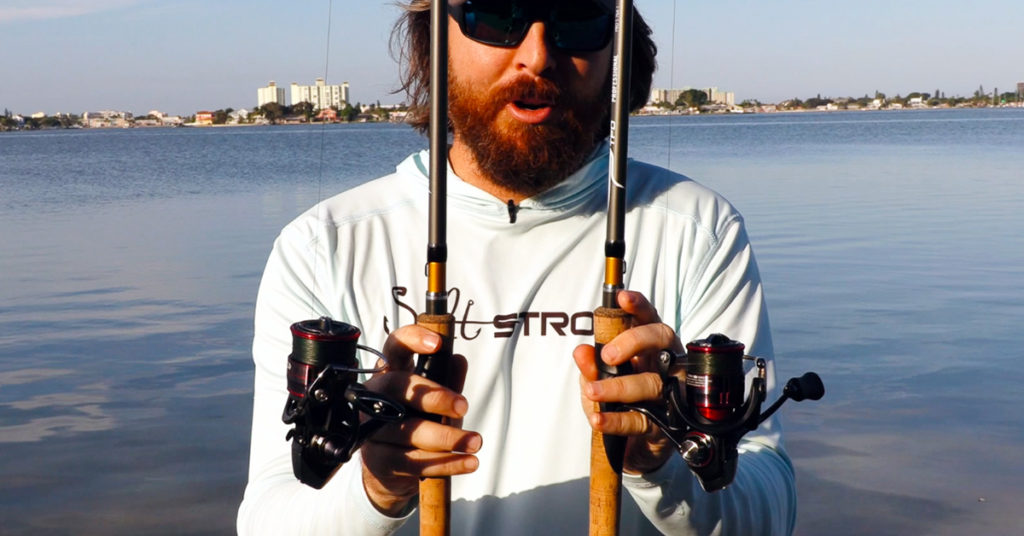
I’m fascinated at the recent trend of 1000 series reels making a big push.
It’s certainly a valid trend since they can handle any fish in our inshore waters, and the lightness makes a big difference if you’re fishing a lot, or you have elbow, wrist, shoulder, or arthritis problems.
And I’m really interested to hear Luke’s thoughts as he continues to try them out.
You can see his first experiment where he tested a 1000 vs. 3000’s casting distance here.
Have you used a 1000 series reel?
What’s your favorite size reel for inshore fishing?
Let us know down in the comments!
And if you know someone who’s looking for a new reel, please TAG or SHARE this with them!
P.S. Want access to our best fishing spots and tips, plus discounts to our online tackle store? Click here to join us in the Insider Club!
Related articles:




And I got one other thing to say as far as line goes in line twist that’s the thing that amazes me everybody that uses braid on their spinning reels they don’t play the fish they they just real and real and real and let the drag spin while they’re reeling and they get all this twist in their line and they wonder why they have trouble with their line management it’s because you’re twisting it up you twist your lineup it doesn’t matter if it’s bright or not eventually it’s going to start kinking up so I think that’s asinine play the fish the right way with the drag that’s what it’s there for let the fish have his turn instead of just trying to horse it in and really like a rookie that doesn’t know what the hell he’s doing and I watch Pros do it I watch rookies do what I watch intermediates do it and I think it’s absolutely retarded especially for somebody that’s pro level or advanced, braids have caused people to sabotage themselves it’s just retarded play the fish the way you’re supposed to use your drag the way it’s designed to be used give and take you take a turn the fish takes a turn and telling tires out and then you walk back when your net Man’s net in the fish take three quick steps back and you can move that fish 10 ft how it works I don’t understand it but I just know that it works I’ve seen people lose many fish at the boat or at the net because they are they’re lifting way too hard with light line on a big fish but those three quick steps backwards you can drag that fish 10 ft across the water and it doesn’t break your line and it doesn’t overload your overload it I don’t understand how it works but it some kind of physics of science thing but I just know it works people are really getting away from actual angling skills and just using braid to horse them in and that’s why they lose so many fish because they overpower their equipment or their their hooks or the fish is a mouth ability to hold the damn hook and they rip a hole in their mouth and it pops out when they jump so get back to Ashley fishing not relying on brain and then you’ll have a lot less problems on the water. You’re talking about that Marlin that was caught on two pound test line that’s something I can do no problem you just got it on your rod and you’re reeling your line match perfectly you can’t overload any aspect of it and you have to play the fish that means you use your drag and you need to give and take you allow the fish to take his turn and on 2 lb test your guys going to be set loose is going to take a long term but when you want more dragging just lay your finger on the pool can you give it more drag and you can instantly take that drag off when the fish takes a big surge and you don’t have a problem tight lines everybody
My apologies I got a lot of typos there from my speak to text but just read between the lines I think you’ll get the gist of what I’m saying cuz I’m not going to go back and fix it all but the really short version is you just have to make sure that your Rod you’re real in your life it’s all working construction conjunction not Construction with each other and you don’t get the best out of it regardless of what size you’re using
My take on real sizes is your 500 and 1000 sizes are Associated more with ultralight setups and your 2000 2500 and 3000 size reels are associated more with like fake bass fishing or your insurance you guys are talking about in line capacity is really the only big difference but like you said the 2500 and 3000 on a lot of reels used the same real body and it’s just a bigger spool from the 2500 to 3,000 obviously giving you more line capacity or you can use a higher pound test and I’m still get playing a lot on your real that way but for the most part there really isn’t a big difference between them other than that and you know personally I’m a light line Big Fish specialist That’s what I do all the time and it comes down to you have to have a complete setup your Rod you’re real your line all the way to the hook that you’re using the weight Etc obviously smaller schools lighter line less weight you can cast equally as far as you can with a bigger spool and line and and higher weight but you have to you can’t overpower Your Rod either so you have to have your action your ride action your your line size your weight you know and typically if it’s a rate and say 8 to 12 pound test you don’t want to go 12 lb test you want to go no higher than 10 you want to stay kind of in that sweet spot not exactly in the middle but you know about 3/4 of its capacity and you’re going to get the best out of your whole set up that way that’s my take on online in real sizes take it for what you will but that’s what I do I I fish light line and I catch big fish I’m talking like 2 lb test for 20 lb plus trout and I have no trouble Landing them other than when I’m combat fishing and you know you got a thousand people on the lake and you got some rookie that doesn’t realize not to set the hook because he’s not bit I’m trying to get underneath because I’m fishing running down the bank but you know that is what it is and that’s part of the deal but I’m usually I’m usually really good at that and I have my net out in front of me telling me over under and that helps eliminate a lot of that even if somebody sets the hook on you when you using two pound test as an example and obviously with two contest you’re going to be able to cast The Country Mile with just a little size seven split shot or a little mini jig for cuz so it can be done you just have to be conscious of what you’re doing and make sure you got your entire set up dialed in everything has to work in conjunction with one another and that’s how you get the best out of your reels regardless of what size you choose and like I said just stay in that sweet spot kind of not quite in the middle but more than three quarter of his max rating and I do that with the the line size on the school and using them either a parabolic ride or or a fast action tip works the best for what I’m from what I’m talking about so you know take it or leave it but that’s my take on these one $1,33,000 size wheels especially nowadays when 3,000 don’t look any bigger than the damn 1000s when it comes right down to it other than the sizes full I don’t really feel like there’s much difference anymore but either way you look at it it’s
Luke, were you able to fish with the 1000 since the recording of this video? Interested in what you found out.
You did Not cover reel return ratio, handle to spool. How fast does it recover the tackle.
Hey Gene! We’ve actually addressed that important factor in another video. Please check it out here when you have a moment: Are You Choosing the Right Gear Ratio Spinning Reel? (saltstrong.com)
The reason why I want a 1000 reel is that I noticed when I use my centaur xxul rod with a larger reel just say 2500 I get line slap against the rod because of the micro guides so I feel the more narrow the spool the less chance of line slap is much less
I appreciate that you guys give us your unbiased thoughts on products. In this case though I have to say that you left out a major consideration in my mind and that is drag. I’m a Stradic fan and have several 2500’s, 3000’s and 4000’s. I don’t have any 1000’s for one basic reason and that is that they only have 7 lbs of drag. The 2500’s and up have 20 or more. That’s a big jump. I agree with you on the weight and I do pay a lot of attention to that which has migrated my most used reels down in size. I also notice significant differences across reel families between the same size reels. The Stradic 3000 is 7.9, Daiwa BG MQ 3000 is 9.3
Good point, George. As a general rule of thumb, we should aim to have our drag setting be 20-30% of our line rating. In other words, with 10lb. braided line (even though technically the breaking strength is higher), a good drag setting on your reel should be pretty close to 3lbs. Many of these manufacturers give drag ratings WAY beyond the necessary range that an angler will ever use. Having a drag setting at 8-10lbs. of pressure is pretty significant, and very hard to hold onto with a spinning rod (it will probably feel like the line is going to snap at that amount of pressure). So surprisingly, when set at around 3lbs. and using 10lb. line, a 1000 can actually get the job done pretty well. Wyatt actually made a great video about this topic a few years back: 2 Ways To Set The Drag On Your Spinning Reel (With & Without A Scale) (saltstrong.com)
As for reel sizes between Manufacturers, there is no industry standard. A Shimano 3000 is going to be different in sizing than a Daiwa 3000, as well as a Penn 3000. Even the current Daiwa BG series has different sizing than the upgraded Daiwa BG MQ series. This lack of standardization also crosses over to rods as well (Ex: not all Medium Power Rods feel the same).
When it comes to choosing a Reel that’s right for you, it’s definitely important to consider all the specs: line capacity, weight, level of sealing and drag capacity. But just because one particular reel has a “higher” drag or a “lighter” overall weight doesn’t necessarily make that reel better than its competitor in all aspects. This is a great topic for discussion in our Community page, George! Post it up there when you have a chance 🙂
I agree with you academically on the drag. 3 pounds is the right setting for 10lb braid. I also agree about how easy it is to underestimate exactly what 15 or so pounds of drag feels like. However, just like when fighting tuna or marlin there are times inshore when I push my drag up toward or to full. Keeping a fish away from pilings or other hazards or at the end of a fight where I need to get the fish to the boat to ensure a successful release (or keep it away from a porpoise).
I don’t think I’m as sophisticated as you guys so I need a little extra ruggedness. I also generally fish with what I want to catch them on, even if I know they’re biting something else, topwater being the best example of that. Never after numbers, always after a fish worth pulling out the camera for. Makes me leery of these tiny reels with line test almost in the single digits. I just recently put 10 lb braid on a 2500 and it was the first time I had ever put anything that light on a reel in my life. And I’m 60 and have been fishing my entire life. Thank you for your thoughts. I know it probably feels like I’m pushing back on it but I’m a harder sell than most on going really light. Appreciate you humoring me.
Ahoy! Thanks for this podcast as it has answered many of the questions that come to mind while I am thinking things thru between casts, or especially when I am contemplating adding to my equipment inventory.
Just a couple of points I might mention here…. *As You were discussing ARBOR SIZE for the various size of reels….. There is another important point to consider. Having been an offshore fisher for many years and user of big spool reels it was always critical when playing a strong fish to compensate for arbor size. I am not talking about the size of the reel arbor per se, but rather about the diminishing arbor size of the spool as it is is being ‘cleared’ when a large fish is taking a big run. What I am saying is that a full spool of line set at 20# drag, for example will, when at 1/2 full probably be exerting a significantly higher drag to the line…PLUS the fact that the heated drag plates themselves are expanded / warped due to the heating under drag pressure. So, does this principle apply to these much smaller reels? And if so, is a change of technique or manual compensation of drag by the fisherman themselves necessary? *My second point is that I notice some braided lines might be marketed or supplied online at a requested breaking strain, but then state that the line supplied has actually been tested to surpass the break strain by a lot more, like 40% more I’m talking. Any comment or advice on that?
*My final point is that certainly with mono line the fisher must be aware and compensate for the fact that the closer the fish is to the landing net (etc) the less stretch, and therefore, forgiveness there is for the fisher themselves doing something brutish with a fish still ‘hot’ and feisty. I feel that is why so many fish are lost right next to the boat rather than earlier on in the tussle. So… how do I as a fisher look at a battle done with mostly braided line, which has so little stretch? Thanks for listening.
d
The 1000 series sales boom is likely largely driven by shortages of 2500 & 3000 series.
My 2500 fuego 10lb test casts farther than my 300. Have it on a 7’6″ medium rod and it is an absolute blast to use. Been slamming the permit and pomps with it lately. I didnt mention rod for a reason.
I do believe a rod is the most important. I’ll spend more on a rod than a reel but I couldnt find a rod I wanted for the 2500 for over a month. Was al a tackle shop and picked up a $39 cheap Diawa 7’6″ M Laguna temporarily until I could get what I wanted. I use Loomis and Carrot Styx but have to say that I fell in love with that $39 diawa rod. I absolutely love it. A very light combo perfectly balanced. Its a perfect match with the fuego 2500 and in 3 months I have not had one single wind knot with it using red 10lb power pro. There are some cheaper rods out there that really are great rods.